

Sabin Fellow Farfan-Rios Shares Implications from Decades of Research
In a recent explainer from our colleagues at Wake Forest News, Sabin Center Fellow William Farfan-Rios talks us through how Andes Amazon forests struggle to adapt to the challenges of climate change. With four decades of monitoring data across a massive transect covering 3,500 meters in elevational range — from lowland Amazonian forests to the Andean tree line over two miles above it — Farfan-Rios and his fellow researchers at the Andes Biodiversity and Ecosystem Research Group (ABERG) have a wealth of insights into the ecosystem over time and space.
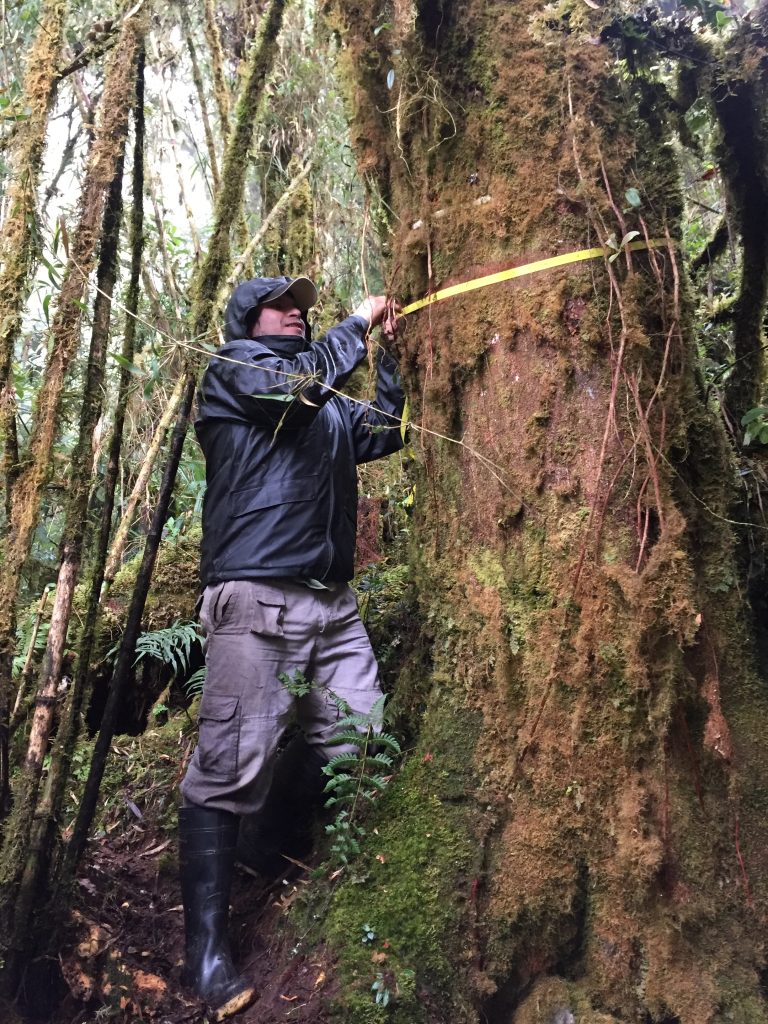
Unfortunately, the news so far isn’t good. Scientists had hoped that the forest would be adapting to increasing temperatures at roughly the same rate as the climate was changing, but trees have been unable to shift their ranges or adjust physiologically as quickly as they need to. As Sabin Center Founding Director Miles Silman, who helped to co-found the ABERG project and supervised Farfan-Rios as a graduate student, has previously observed: “the forests are changing, but they’re not changing in the ways that make them resilient to climate change.”
When Andes Amazon forests struggle to adapt, the repercussions may be felt globally. Given trees’ long lifespans and slow reproduction, as well as growing threats like deforestation and habitat fragmentation, this lag in adaptation jeopardizes biodiversity and the forests’ ability to regulate carbon, water, and climate — processes essential to ecosystems and human communities around the world.
Learn more about what’s happening and why it matters from Farfan-Rios:
For more on global challenges like this, dig into our work addressing Environmental Crises on Tropical Frontiers.