

Convening Stakeholders from Winston Salem to Juba, South Sudan and Beyond
On April 30, the Sabin Center, in partnership with the White Nile Sudd Center, hosted a global virtual forum – The Sudd Wetland: Lungs of the Nile Basin – which welcomed over 75 citizens and practitioners from around the world, including 40 stakeholders gathered in Juba, South Sudan. This public program, which was made possible thanks to the generous support of Wake Forest University’s Center for Global Programs & Studies, was followed the next day by convening a transnational working group to advance collaborative efforts.
Why It Matters
Sitting in South Sudan in the basin of the White Nile, the Sudd Wetland is Africa’s largest wetland system and one of the most important and least understood social, hydrological and ecological landscapes on the planet. It plays a critical role in regional climate regulation, supports the world’s largest mammal migration, underpins livelihoods for millions of people, and shapes the hydrology of the central Nile Basin sub- basins. Yet policy, investment, and risk management decisions affecting the Sudd rely on data that are decades old, fragmented across disciplines, and inaccessible to decision-makers and communities.

Stakeholders from across South Sudan gathered in Juba to join the virtual forum, including local leaders, practitioners, academics, NGO experts, and more. Representatives of the Rift Valley Institute joined the conversation from locations across Africa.
The Conversation
Our program featured a series of presentations and panels exploring the current status of infrastructure, wildlife, protected areas, land cover and use, community resilience, and the impacts of climate change on the Sudd, helping us to advance our collective understanding of this critical ecosystem and to build partnerships toward a more sustainable future for the region and its people.
Forum Leadership.
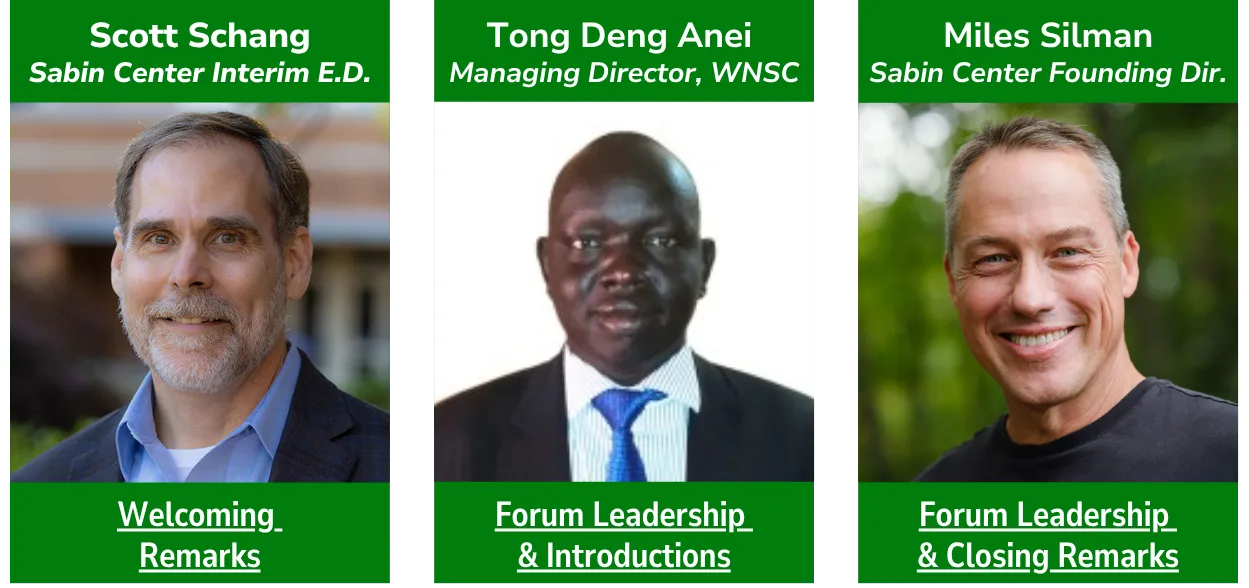
Guests were welcomed by Sabin Center Interim Executive Director Scott Schang and White Nile Sudd Center’s Tong Deng Anei, who was instrumental to organizing this program, delivered introductory remarks. Sabin Center Founding Director Miles Silman delivered concluding remarks at the end of the day’s fruitful conversations.
Foundational Insights.
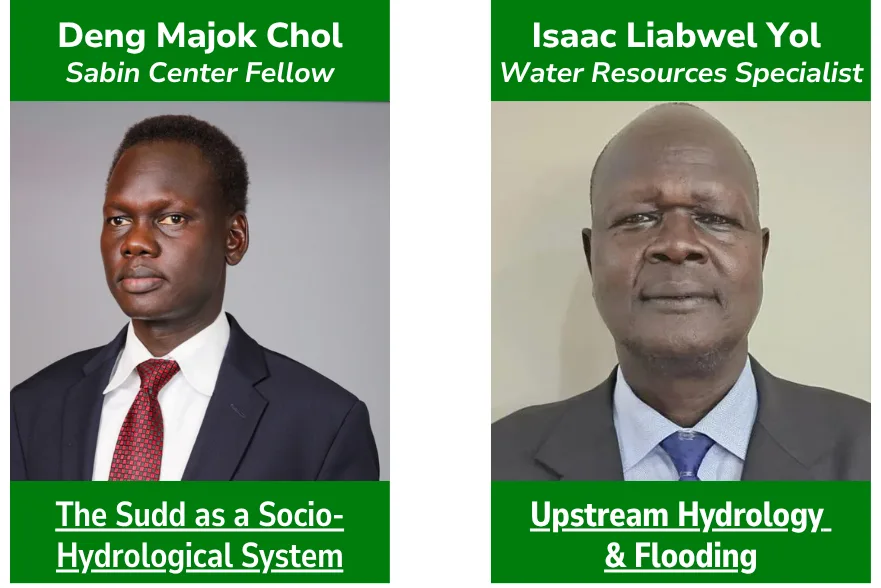
Our learning was kicked off by Sabin Center Fellow Deng Majok Chol, who provided context around the Sudd Wetland as more than just an ecosystem, but as a socio-hydrological system where the ways in which human lives and the wetlands operate deeply impact each other. We then got a closer look at the multi-source hydrology of the region from Isaac Liabwel Yol. |
Landscape & Place
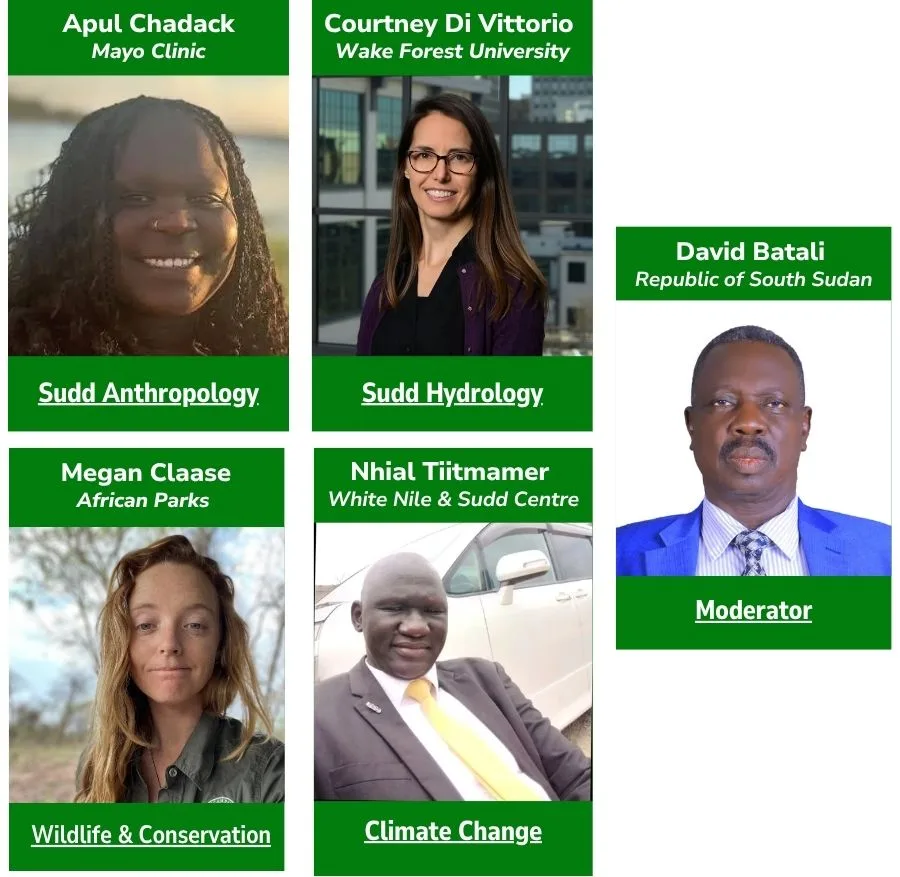
Several experts shared their insights and engaged in a moderated discussion about the multiple dimensions of landscape and place, including social, wildlife, and hydrological dynamics.
Governance & Livelihoods
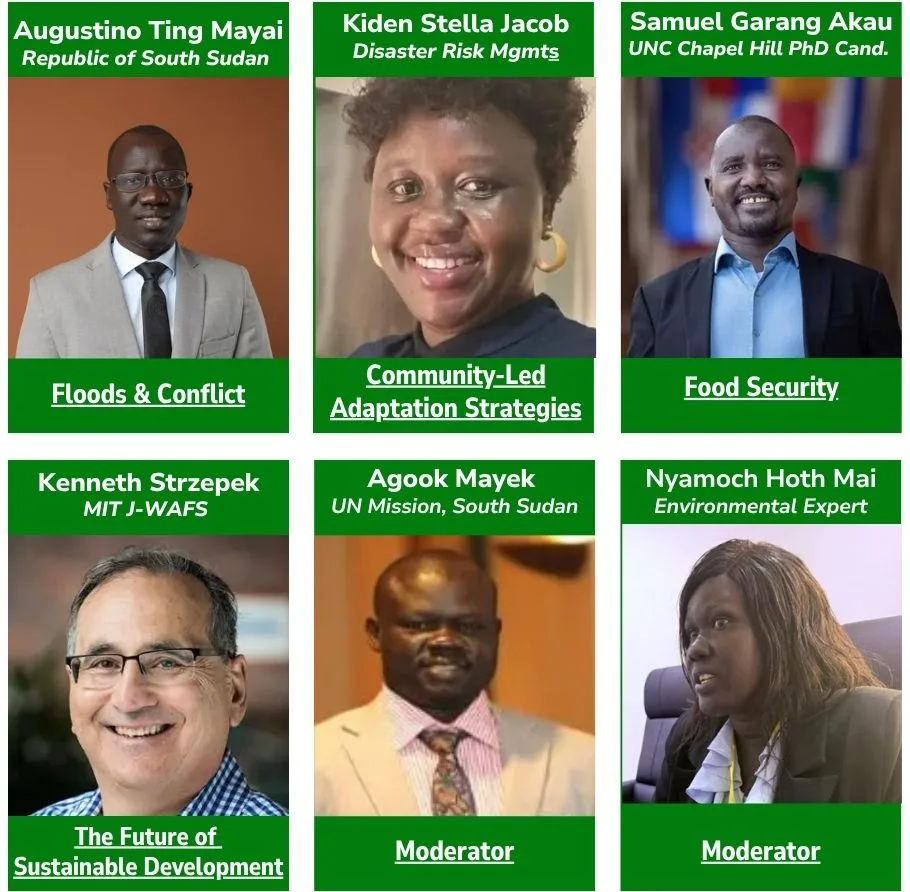
Next we got deep insights into how key human dynamics are unfolding in the Sudd, including the interplay between flooding and conflict, issues of food security, community-led adaptation strategies, and the future of sustainable development.
We’re looking forward to sharing more about the conversations that unfolded, as well as next steps as we look to help create a more resilient future for the Sudd wetland.