
Catanoso Reports: Glimmers of Good News from the Amazon
“Novel research finds unexpected climate resilience in up to 36% of Amazon forest”
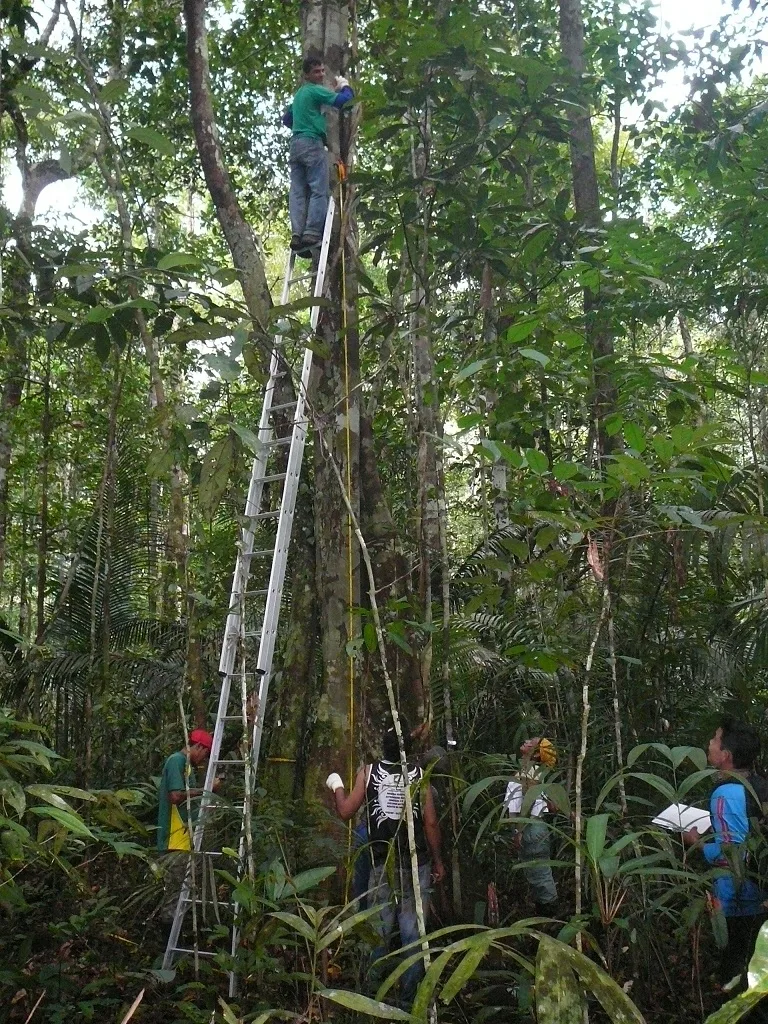
Recent research from the Amazon finds that the region’s vast wetlands, or shallow water table areas, have shown surprising drought resistance through years of intensifying climate change. According to reporting from Sabin Center Board Member Justin Catanoso, forest ecologist Flávia Costa’s long-term research illuminates the ways in which lowland forest wetland ecosystems may be uniquely suited to weather the effects of droughts. Costa’s February 2026 paper, “Palms and trees resist extreme drought in Amazon forests with shallow water tables,” evaluates data going back to 2009 in a large 373-miles transect in central-southern Brazil.
A new narrative
Costa’s research emerges in stark contrast to predominant narratives about the Amazon, where recent research suggests that consecutive, record-breaking droughts appear to have degraded forest ecosystems and biomass dynamics in the more frequently studied upland forests with deep water tables. Whether the findings in these wetlands are sufficient to counterbalance the broader trajectory of the region is a question of some debate, according to Catanoso’s reporting.
“The beauty of this research is that it is based on fieldwork, actual measurements in the field, and not modeling. Also, it is long term and spans large areas so the scientists have a good handle on what’s actually happened over time.”
— Enrique Ortiz, Andes Amazon Fund
Costa notes that this data is important because it not only offers a new perspective, but it can drive new management approaches that leverage this unexpected resilience.
Read on to learn more about Costa’s findings and the broader Amazonian climate change context.