
Catanoso Reports: Pathways to Resilience in the Amazon
“Study offers first map of Amazon’s climate-resilient upslope corridors”
As the world warms, plants and animals must quickly migrate to cooler places to stay resilient and survive. For tropical species in the lowlands of the Amazon, the fastest path to survival isn’t traveling thousands of miles north or south — it’s moving uphill. By migrating relatively short distances to higher elevations, plants and animals can find the cooler temperatures they need to survive.
Sabin Center Board Member Justin Catanoso recently reported in Mongabay on a groundbreaking new study that has mapped these vital pathways, creating actionable information for policymakers tasked with conservation in one of Earth’s most critical microbiomes.
Published in Global Ecology and Conservation, the study — co-authored by Sabin Center Founding Director Miles Silman — analyzed massive datasets across eight countries to identify exactly where species have the best chance to migrate safely, creating a first-of-its-kind roadmap of the Amazon’s most climate-resilient upslope corridors.
The Western Amazon: A Vital Stronghold
By overlaying elevational gradients, forest cover, and habitat fragmentation, lead researchers Ian McCullough and Chris Beirne found that the western Amazon — specifically the Andean spine of Peru —is the ultimate stronghold for climate resilience. The region offers huge elevational gradients, large, established protected networks like Manu National Park, and contiguous, uninterrupted forest corridors.
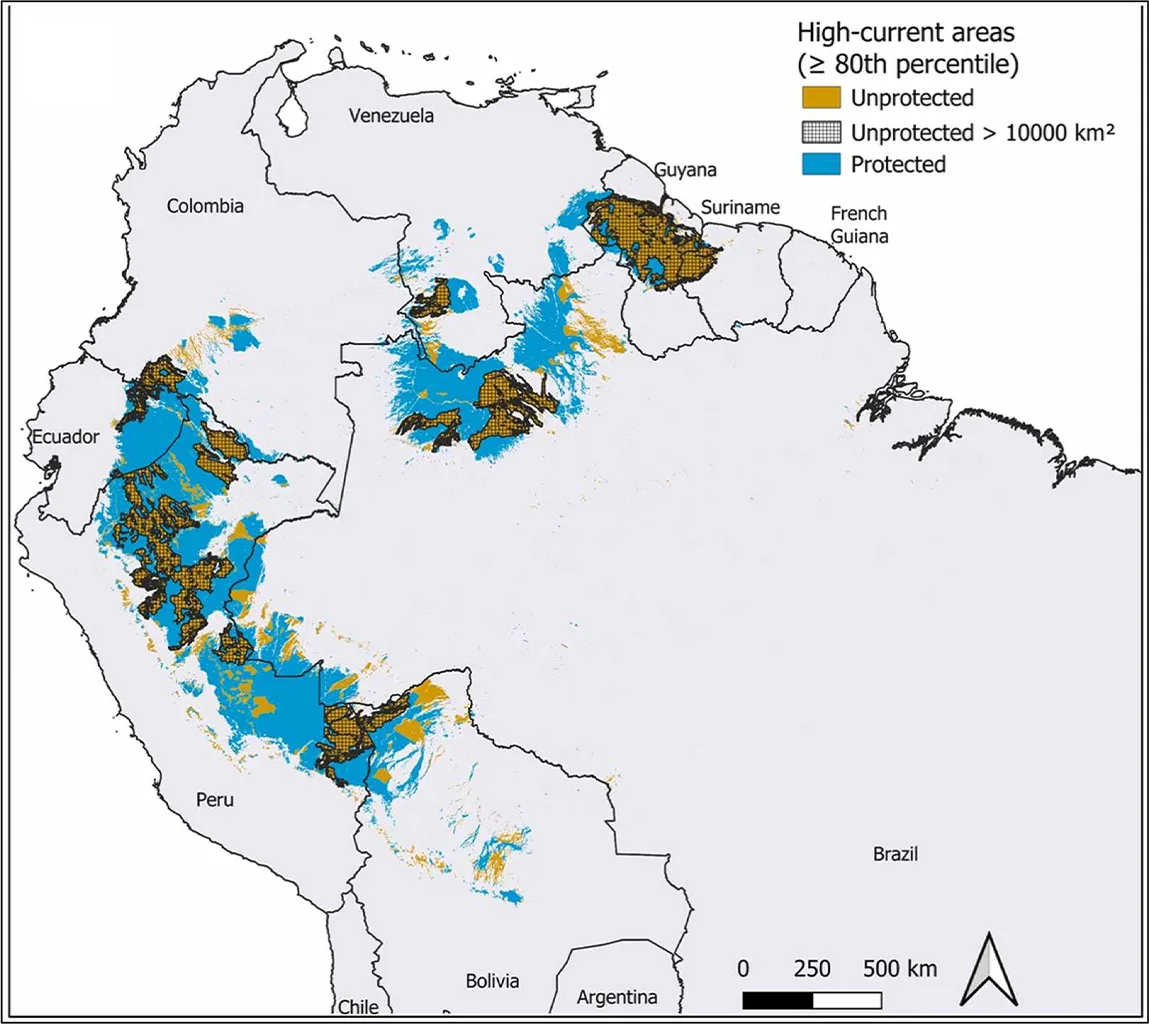
The region, home to some of the greatest bird, butterfly, and plant biodiversity on our planet,
has been studied in-depth over two decades. The international Andes Biodiversity and Ecosystem Research Group (ABERG), founded in 2003, has monitored Manu’s upslope species migration practically in real time on one of the largest elevational transects under constant study in the global tropics.
Why We Must Act Now
Nature’s ultimate defense mechanism is the freedom for species to move. Unfortunately, deforestation and infrastructure are fracturing these natural uphill highways. Furthermore, migration is complex; species relocate at different, piecemeal rates, facing ecological bottlenecks, unfamiliar soils, and new predators as they climb.
The two superpowers that life has, and that’s allowed life to persist through all the past trials and challenges, is the existence of big areas of uninterrupted habitat and the ability of species to move within them as necessary.
— Miles Silman, Sabin Center Founding Director and Co-Author of Study
Indeed, a 2016 study from ABERG researchers Silman and fellow tropical ecologist Kenneth Feeley concluded that, given the threats of climate change and human disruption, “the biggest determinant of many species’ extinction risks may be their ability to migrate through unprotected habitats.” This new research gives international donors, NGOs, and governments a precise blueprint to target funding and land protection where it will have the absolute highest impact on saving biodiversity.
These connected corridors are our lifeboats; we need the policy world to protect those corridors that are strong and healthy. This study provides a great map of what we should be focused on over the next decade.
— Andrew Whitworth,
Sabin Center Fellow and Study Co-Author
Learn More
To dive deeper into the researchers and the science behind the Amazon’s climate lifelines, check out the full article.
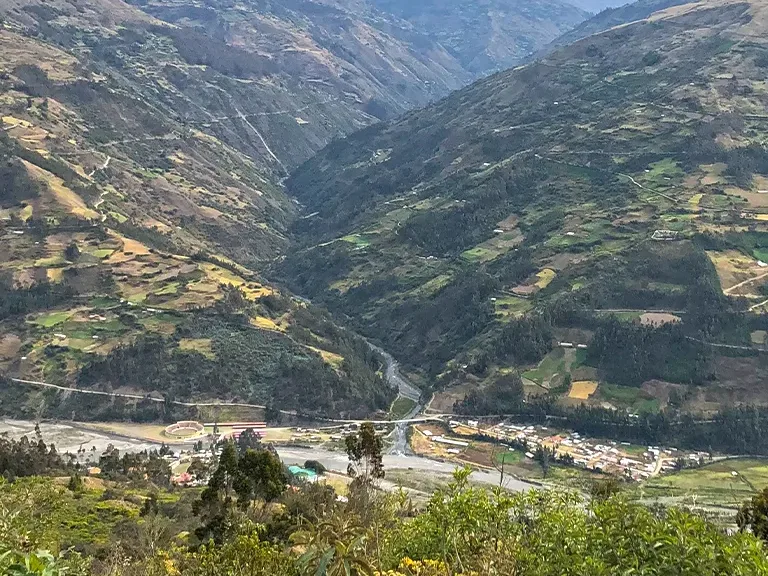
Header Image: Wayqecha Cloud Forest Biological Station, founded by the Conservación Amazónica, is situated at 3,000 meters (9,800 feet) altitude in the Peruvian Amazon. It looks out onto the unbroken, densely forested spine of the Andes Mountains which form the climate-resilient corridor essential to upslope migration. Image by Justin Catanoso.