Student Reflection: Lighthouse Reef and the Challenges Our Oceans Are Facing
by James Bauman
(Reprinted from The Pursuit, the new summer publication from Wake’s Outdoor Pursuits team)
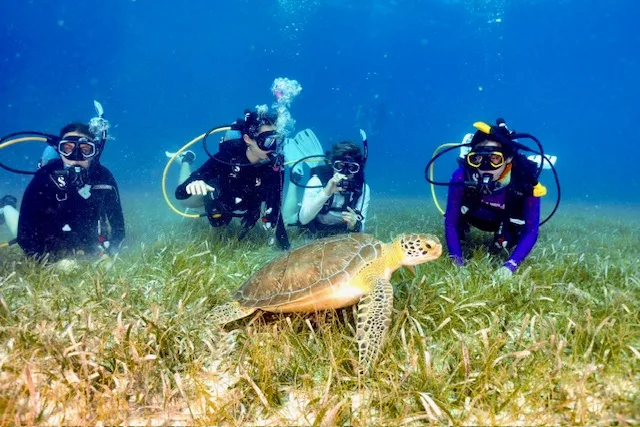
I had spent three months between Salem and Winston Hall fantasizing about what I’d see on the reefs we studied. A few days into the trip, the time finally came to discover what Lighthouse Reef Atoll had to offer. Our divemaster, Elvis, yelled to get in, I flipped out backwards with heavy scuba gear on, and after a disorienting somersault, opened my eyes to a surprise: I was enveloped on all sides by a school of large Bermuda chub as far as I could see.
From above the surface, the hundreds of fish species and dozens of corals and sponges remained hidden, and the ocean looked more like an expansive desert than the marine rainforest that it is. And in fact, much of the ocean is a desert with significant portions devoid of nutrients and life. Yet, coral reefs make up for these “deserts,” sustaining over 25% of all marine life while only accounting for less than 0.5% of the ocean floor.
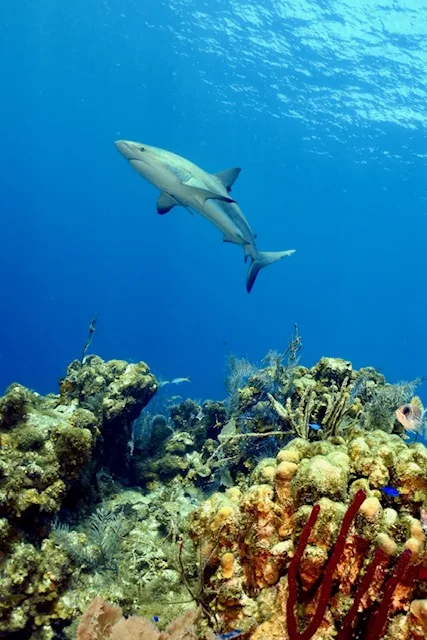
Other than the sheer size and number around me, the school of fish that I accidentally cannonballed into is an unsuspecting type of fish with a burly, oval-shaped gray body. Compared to the moray eels, sharks, and parrotfish that we saw on the reefs, the chub ranked far lower on species that caught my eye. Yet, the chub is arguably one of the most important fish on a changing reef. With warming temperatures, Lighthouse Reef now faces coral bleaching, increased macroalgae, and a greater susceptibility to pathogens, which combine with numerous directly human-caused stressors like overfishing.
While literature on the exact estimated consumption is sparse, the chub is a known herbivore on reefs, controlling macroalgae populations and keeping coral healthy. One study has even found that these lawnmowers of the sea consume numerous algae types that other herbivores avoid due to defense chemicals, further highlighting just how important they are to reef health.
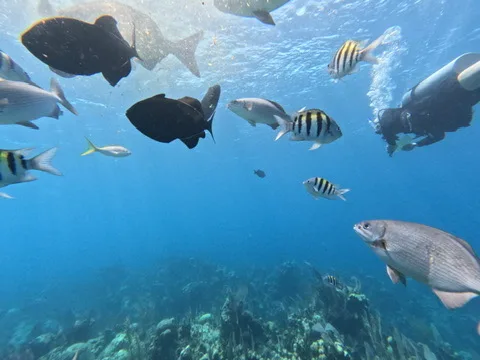
Bermuda chub are a great example of how deeply connected reef ecosystems are, and how the loss of just one species can ripple through an entire habitat. Without chub grazing on algae, algal cover can quickly increase, filling space that corals need to survive and grow; not to mention, leaving an unfulfilled ecological niche as many other herbivorous fish simply do not eat the same algae species that chub do. As algae spreads, coral health and reef cover decline, leaving countless reef organisms without the shelter and food sources they depend on. It is striking to realize that removing one funny-looking silver fish can set off a chain reaction affecting an entire underwater community, a scenario that is daunting: less fish, less coral, and an ocean in poorer health.
But this is the situation we find ourselves in. Overfishing has removed essential herbivores and species within the food web, weakening reef and ocean health. Globally, hard coral cover has roughly halved over recent decades—from about 36% to 19% following major bleaching events (1998–2017)—while algal cover has increased from ~38% to ~51%, reflecting a widespread phase shift from coral-dominated to algae-dominated reefs. Simultaneously, reef-associated fish have also declined dramatically, with catch-per-unit estimates down as much as 60% since 1950. Regionally in Belize, trends are consistent with nearby coral ecosystems like Glover’s reef, which is about 20 miles away from Lighthouse reef, has seen shifts from about 80% coral to now 80% macroalgae. In addition to coral changes, fish and other marine species like conch and sea cucumber have seen huge declines. By removing essential reef players, fish biomass and coral cover not only decline, but the effect on coral of other climate change-driven changes, including the breakdown of the zooxanthellae-coral symbiosis and susceptibility to a variety of pathogens, are greatly exacerbated as essential parts of the living ocean machine are removed.
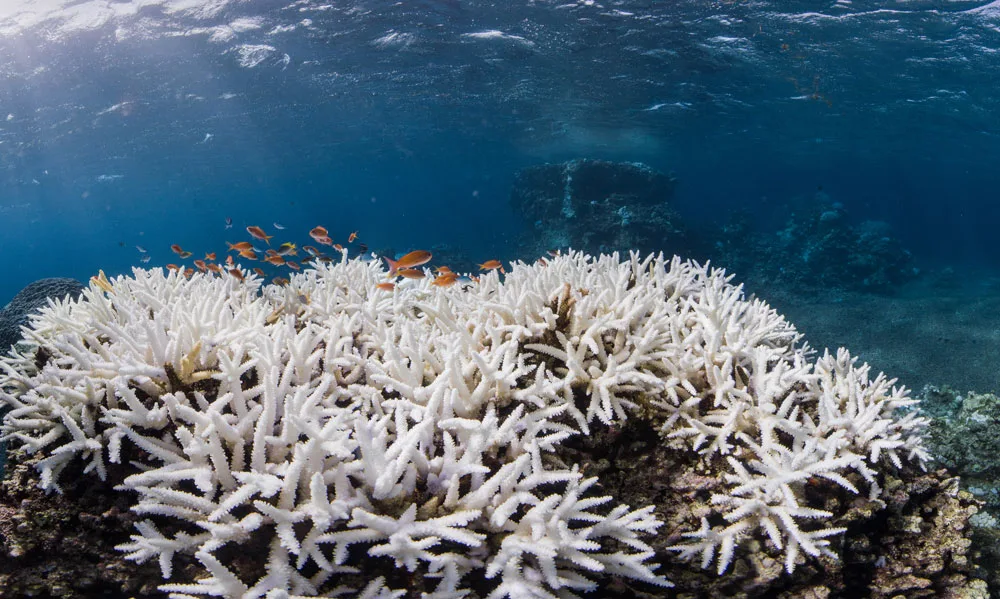
Coral bleaching occurs when rising ocean temperatures or other environmental stressors disrupt the relationship between corals and the symbiotic algae (zooxanthellae) living inside their tissues. The stressed corals expel these algae—losing both their color and their primary source of energy (as seen here) —and if stressful conditions persist for too long, the corals can starve and die.
During our time diving, these changes were evident. While Lighthouse Reef is a pristine coral ecosystem compared to places such as the Florida Keys, where I had dived previously before this and where coral cover is ~15% or less across all reef sites, stories from locals and dive guides, along with extensive reading on scientific literature leading up to the trip, suggested that the atoll looked very different from what it does today. Probably most impactful was reading about the first survey work done on Lighthouse by Stoddart in the 1960’s, where he described elkhorn and staghorn coral dominating the reef. Seeing algae all over the reef with very few staghorn and no elkhorn was extremely impressive, revealing that these stressors really are causing change, and it’s playing out on even some of the healthiest reefs. As I was underwater each day, questions raced through my mind: What do we do about this? How and why should someone so far removed from Belize care about this? Will coral reefs be the first ecosystem we see go extinct on Earth?
But nature is resilient, and there is hope among the gloominess of reef decline, particularly with how we actively manage our reef ecosystems. Marine protected areas (MPAs) are one of the clearest tools we have for doing this, and the difference between protected and unprotected reefs can be stark. Across global reef systems, well-enforced MPAs support dramatically higher biodiversity and biomass than fished areas, including roughly ⅔ more total fish biomass, 5x more large fish biomass, and up to 14x more shark biomass. These are not just statistics about exotic ecosystems—they represent healthier food webs, stronger herbivore populations that keep algae in check, and reefs that are more resilient to climate stress. Seeing the ecological shifts already occurring at Lighthouse Reef made it difficult not to wonder what the atoll could look like if the entire system—not just portions of it—were protected as one connected marine reserve.
At Lighthouse, there are two MPAs with no fish zones at Half Moon Caye and the Great Blue Hole, and about 27% of the atoll is under protected status. These MPAS are extremely important on an ecological and conservation level, but also an economic one as well. Studies show that protected reefs at a local economic scale support greater ecotourism income, local employment, and recreational opportunities while improving nearby fisheries over time through what is known as the spillover effect of fish that grew and thrived in those MPAs. At a larger scale, estimates from NOAA suggest that reefs within US waters alone create $3.4 billion in economic value through ecosystem services, coastal protection, medicine, and fisheries. Globally, the number is just shy of $3 trillion
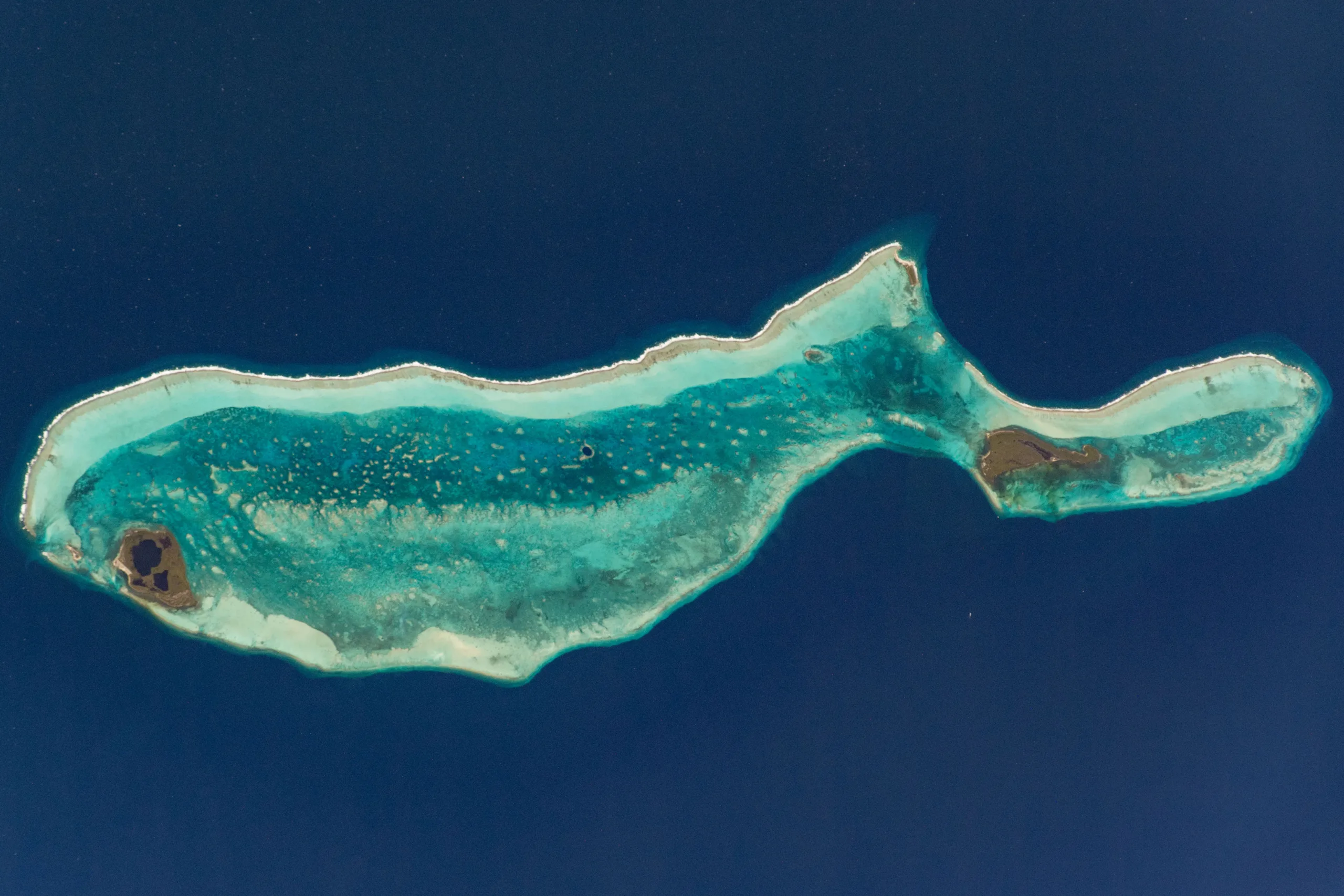
As mentioned earlier, these reefs are also essential biodiversity hotspots that have numerous ecosystem service functions, including carbon storage, climate regulation, and coastal protection from storms and erosion, linking reef health directly to human resilience far beyond the shoreline. Coral Reefs are more than just beautiful backdrops of fish and marine life, they are engines of biodiversity, food security, coastal protection, and economic stability that impact even inland communities far from Belize, like us here at Wake Forest. Continually, the ocean currents that move nutrients, fish juveniles, and coral larvae, and migratory species from the Caribbean and Belize are the same ones sustaining ecosystems and fisheries all along the North Carolina coastline. Protecting reefs through stronger and more connected MPAs, therefore, is not simply about preserving tropical dive sites, but about investing in healthier oceans that support fisheries, buffer coastlines from storms, regulate climate, and sustain biodiversity on a global scale.
Protecting reefs through stronger and more connected MPAs, therefore, is not simply about preserving tropical dive sites, but about investing in healthier oceans that support fisheries, buffer coastlines from storms, regulate climate, and sustain biodiversity on a global scale.
While climate change can feel impossibly large, encouraging the protection of MPAs both in Belize and also close to home throughout the American coastline is one small stride in helping to build resilience among our coral ecosystems and oceans as a whole. And perhaps most importantly, experiences like Lighthouse Reef remind us that ecosystems are not abstract statistics or faraway places but instead living systems made up of a complex network of interconnected species whose futures, just like ours, are increasingly tied to the success of flagship ecosystems like coral reefs.