

Sustainable, Just, and Abundantly Wild, our fall 2025 environmental conference at Wake Forest University explored the increasingly complex and urgent environmental and conservation challenges facing our world. A day packed with compelling discussions was capped off with a keynote from National Geographic CEO Dr. Jill Tiefenthaler.
At the Sabin Center, we’re using the power of the University to catalyze a global community of innovators, educators, and advocates to solve the essential environmental challenges of our time. Programming at our environmental conference highlighted the dynamic ways this comes to life, from right here in North Carolina to the Peruvian Amazon, and addressed the human impact of these challenges locally and globally. This year, we featured several partnerships between Wake Forest and community stakeholders, which we called “Pro Humanitate in Action,” highlighting the ways in which faculty and administrators across the University are merging their expertise with those of the practitioners and leaders out in the community, covering topics including food security, water quality, and protected area management. We also welcomed practitioners at the leading edge of conservation technology to provide a glimpse into the future potential of global conservation, while also looking at how the role of human rights has evolved over the past several decades, with an eye to where it’s headed.
Check out the Highlights
Explore the Day
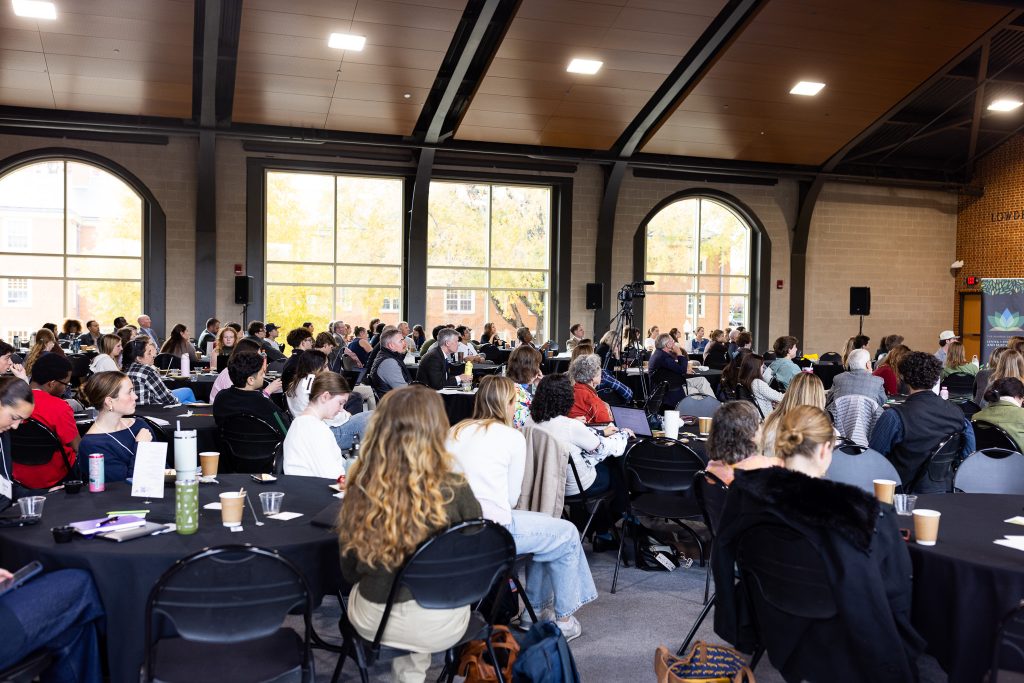
Evening Keynote: From Exploration to Action
National Geographic CEO Dr. Jill Tiefenthaler Uplifts & Inspires
Dr. Jill Tiefenthaler, former Wake Forest University Provost, delivered an awe-inspiring keynote. Her remarks highlighted how National Geographic Society’ lives into its bold mission of using the power of science, exploration, education, and storytelling to illuminate and protect the wonder of our world.
Panels and Presenters
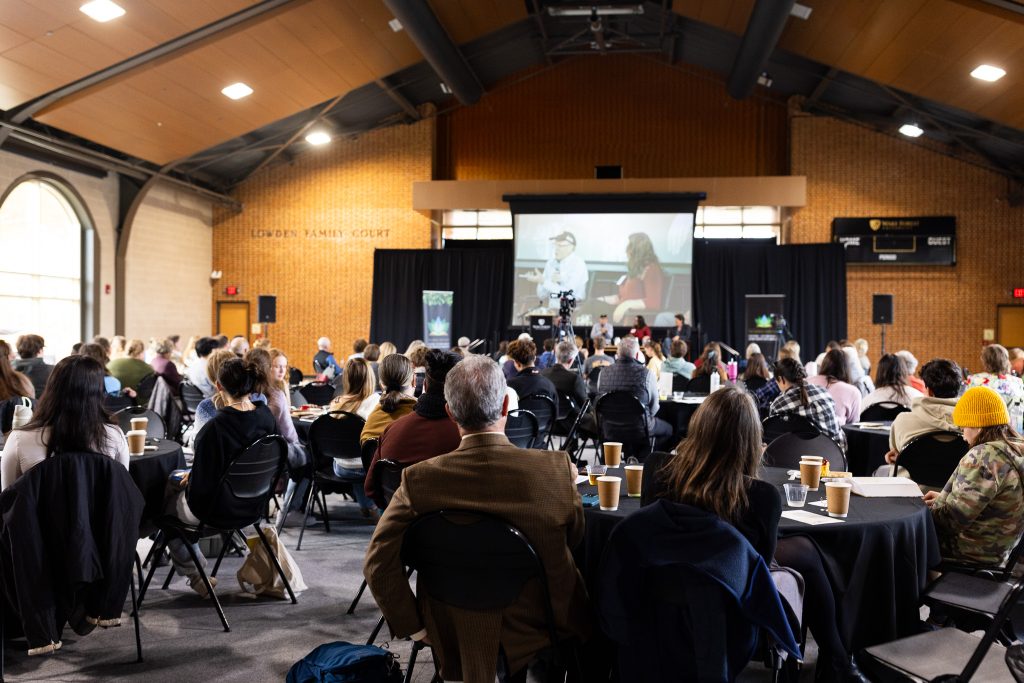
Throughout the day, we showcased leading practitioners, advocates, and innovators from a diverse range of perspectives, geographies, and areas of expertise.
The Role of Heirs Property in Culture, Climate, Conservation, and Agriculture
Ebonie Alexander, Executive Director of the Black Family Land Trust, Faith River James, Executive Director of the Coastal Conservation League, and Brooks Lamb of the American Farmland Trust joined Moderator Scottt Schang, Interim Executive Director of the Sabin Center and Director of the Heirs Property Project at Wake Law, for a lively discussion of Heirs Property, which has been described as the “worst problem you’ve never heard of.”
Protecting People & Place: Human Rights in Conservation
Our lunchtime remarks were delivered by Wake Law Professor John Knox, an internationally recognized expert on human rights law and international environmental law. As the UN’s first Independent Expert and subsequently its first Special Rapporteur on the Environment and Human Rights, Professor Knox developed the foundational Framework Principles on Human Rights and the Environment that govern international law today. In his remarks, Knox addressed the unique interplay between efforts to protect the lands and efforts to protect the human rights of the people who have called the land home, including the ways in which this dynamic has evolved over the past several decades.
Advanced Technology for Earth’s Last Best Places
Some of our planet’s most diverse and important ecosystems are under threat from a rapidly changing climate as well as human development and resource exploitation. In a provocative discussion exploring the role of leading edge conservation tech in helping to monitor and protect these areas, leading practitioners highlighted the tensions between the possibilities for conservation as well as privacy concerns, and the role of private enterprise in funding this much-needed technology. Jeff Reed, Co-Founder of The Cry Wolf Project, Amy Rosenthal, Senior Director of Global Conservation Initiatives at Planet, and Adrian Forsyth, founder of the Andes Amazon Fund, joined moderator Miles Silman, Sabin Center Founding Director and the Andrew Sabin Family Foundation Professor of Conservation Biology.
Pro Humanitate in Action
Community partners were featured extensively in this environmental conference at Wake Forest, allowing us to highlight the incredible work being done by stakeholders on the front lines of challenges from food resilience to community water quality.
Waste Not, Want Not: Resilient Supply Chains for Greater Food Security with Second Harvest
In an uplifting conversation underscoring the potential of integrating academic expertise with real-world challenges, Wake Business Professor Pelin Pekgun and Nikki McCormick, VP, Partnerships and Impact at Second Harvest Food Bank of Northwest NC, joined moderator Dedee DeLongpré Johnston, Wake Forest’s Vice President for Sustainability, Chief Sustainability Officer, and Chief of Staff to the EVP/CFO. The group discussed the challenge of food waste broadly, as well as within food bank systems specifically, and highlighted the ways in which Wake and Second Harvest have partnered to optimize food bank operations and distribution strategies in order to reduce food waste and increase food security, areas where Professor Pekgun has published significant research in recent years.
Partnering in Peru: Strengthening Protected Areas Through Science-Based Management
Dr. Carol Mitchell, Sabin Center Fellow and WFU Research Professor, joined Justin Catanoso, a Sabin Center Board Member and Professor of the Practice in Journalism, for an illuminating conversation about the Sabin Center’s Science for Parks initiative led by Dr. Mitchell. Science for Parks is bringing the most effective science-based practices to some of the world’s most critical protected areas in the Peruvian Amazon. Cristina Miranda Beas, Co-Director of the Science for Parks initiative and lecturer at the Pontifical Catholic University of Peru, was unable to join us due to travel challenges.
Clearer Data and Clean Water in North Carolina: Wake Engineering & Yadkin Riverkeeper
For years, professors in Wake Forest’s Department of Engineering have been working with community partners including the Yadkin Riverkeeper to address water quality issues in North Carolina. Professor Courtney Di Vittorio has been developing advanced programs to monitor water quality at High Rock Lake as the community faces increasing water safety standards. Ph.D. Candidate Jaime Cardenas has spent years working on High Rock Lake’s water needs, and most recently is working to develop technologies that will better filter excess nutrients out of local water supplies. In this conversation, Di Vittorio and Cardenas share their latest advances and highlight the ways in which this partnership has enriched experiential education and research opportunities for Wake while supporting our community partners.